Emergency Medical Resolutions Inc.

The civil service has a data problem.

The data that describes what happens on a call is generated by publicly funded agencies, about publicly occurring events, and it is being closed off. We build on what is still open, for the people actually riding the apparatus, and we argue for keeping it open.


EMR Inc. mark: the letters EMR Inc. set over an engine under way.

The line

What we build on top of it.

Platform

Expect Victims

Built for the operator, not the desk. Red Team is Expect Victims, the tool: OSINT and prearrival property intelligence. Blue Team is OHPAH, the stats and metrics that carry the story: the log and the leaderboard. Both sit inside the one platform.

See the platform
Expect Victims key art: a rescue saw cutting through a concrete wall, sparks throwing across the cut.

Companion product

EXPECTFIRE

Choose an address. Get an alert when an emergency call is dispatched to it. One address, one notification, nothing in between. Only possible because the dispatch is public.

No credit card  ·  No app  ·  30 second signup

Set up alerts, free

The union side

CALL/SIGN: DASHBOARD

The branch that does face the desk. Built per local, a la carte. Aggregated at department and shift level, so the local can argue with numbers instead of anecdotes.

See CALL/SIGN: DASHBOARD

Inside Expect Victims  ·  Blue Team  ·  OHPAH

Three metrics.

Trademarked  ·  Patent pending

OHPAH lives inside Expect Victims. It is not a separate product and it is not a separate login. It is Blue Team, the stats and metrics layer of the platform: the log and the leaderboard, alongside the tool.

Every figure is built from dispatch records the agency already generates. Nothing here is recalled, estimated by the member, or entered after the fact.

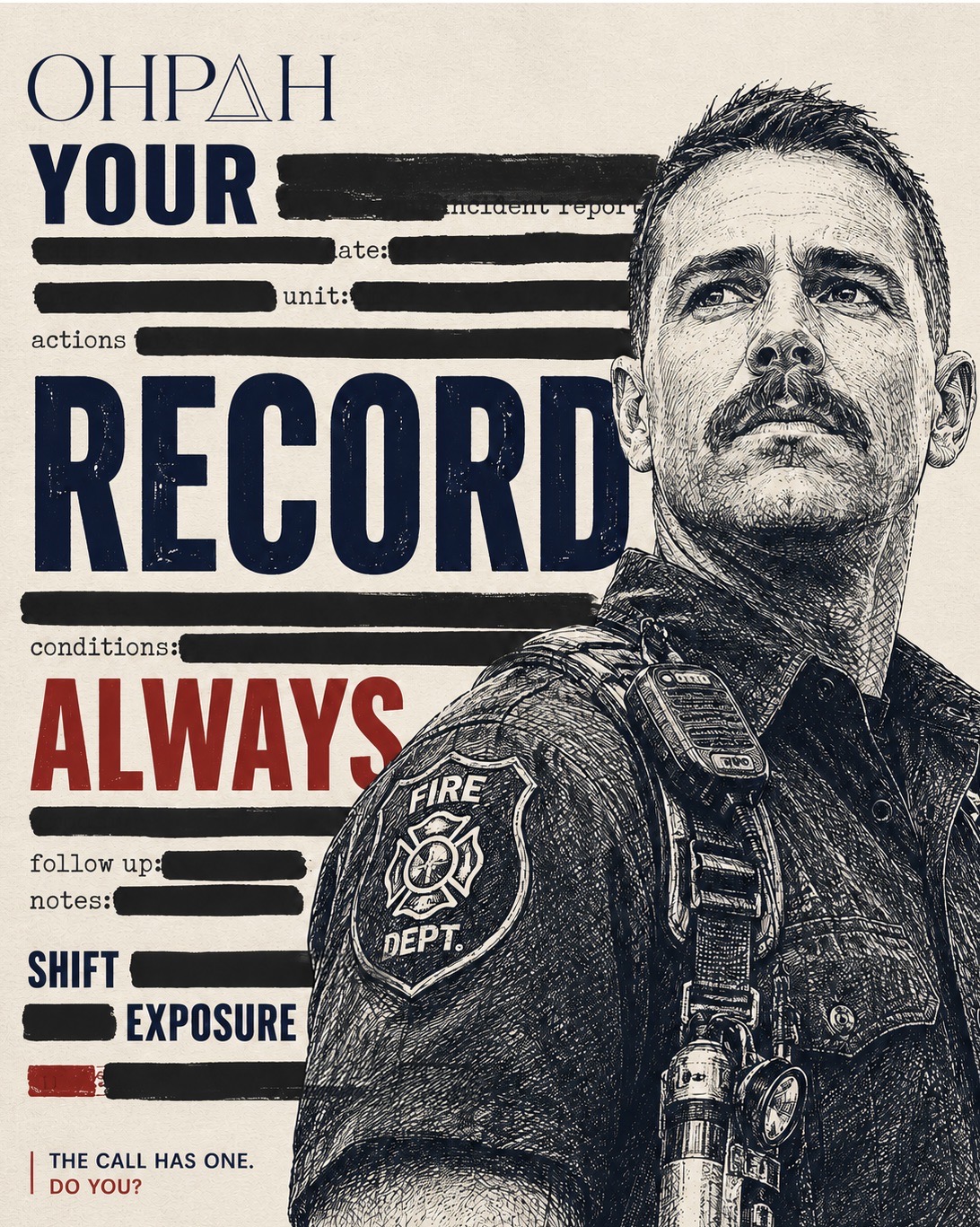
OHPAH poster: Your record, always. A firefighter beside an incident report with most fields redacted.
Fire Exposure Score Detail

Dispatch classification over a rolling window, joined to the construction era of the dispatched address through the county property appraiser.

Sleep Debt Index Detail

Overnight incidents, fragmented pairs, and the longest unbroken gap in the window.

Work Intensity Index Detail

Dispatch density by time of day. Raw total, plus a rate normalized by rostered units and days in the window.

These are counts of observed dispatch activity. They are not a clinical finding, they are not a diagnosis, and they are not a forecast. The member owns the record and can export it. Departments see aggregates only.

What open records make possible

56.20%

of the 82,503 structure fires filed in Florida between 2020 and 2025 reach the official record with the cause of ignition either unresolved or never recorded at all.

More than half of Florida structure fires have no stated cause.

We know that because the records are open. It is the kind of thing that stops being checkable the moment they are not.

The full breakdown, the counts behind it, and what we do and do not claim from them are on the research page.


Our position

Open data builds safer communities.

Not as a slogan. As a mechanism. Open records are what let an outside developer build a tool, let a researcher check a claim, and let a member of the public see how their own department is being run. Close the records and all three stop at once.

01

Open by default

Dispatch and incident data should be published in a documented, machine readable form, on a schedule, without a records request and without a fee. It was paid for already.

02

Encryption should be narrow

Encrypt what genuinely warrants it: tactical traffic, patient identifiers, officer safety. Blanket encryption of routine dispatch traffic removes public oversight and returns nothing in exchange.

03

No single gatekeeper

Taxpayer funded data held behind one commercial gate, licensed back to the agency that produced it, has stopped being public data. Centralized control is the same loss as a lock, arriving more politely.

This is the company position, argued in public. It is not a legal conclusion and it is not a research finding.